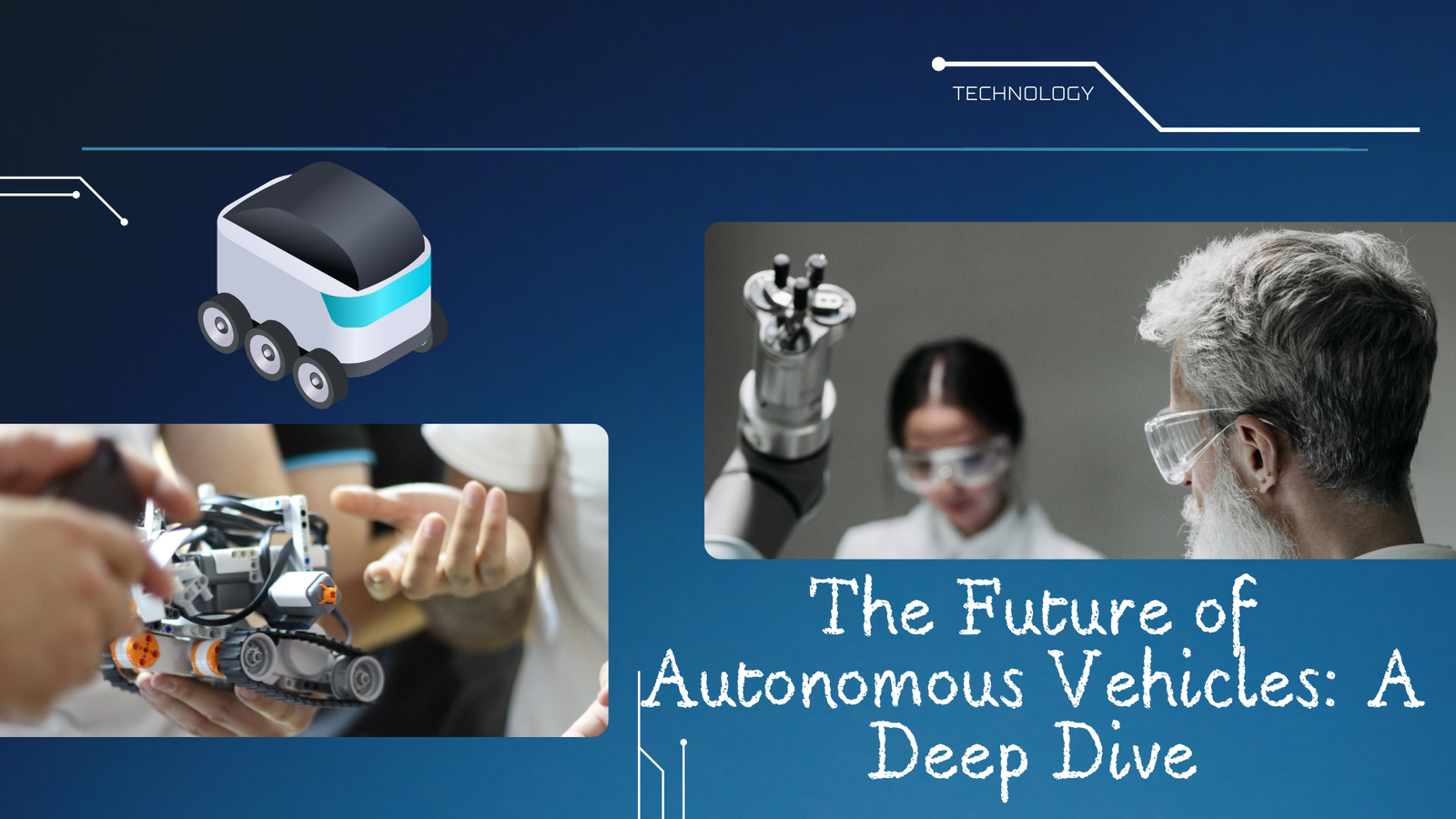
Quick answer: Autonomous vehicles are cars, trucks and shuttles that sense their surroundings with cameras, radar and lidar and use AI to drive with little or no human input. Driverless robotaxis already carry paying passengers in several US and Chinese cities, Level 3 “eyes-off” systems are legal on some highways, but fully autonomous driving everywhere (Level 5) is still years away because of weather, edge cases, regulation and public trust.
This guide explains how self-driving technology works, the six SAE levels of automation, the key players in 2026, the real benefits, the hard challenges that remain, and why it matters to anyone building a career in IoT, cloud or data engineering — with a small worked example of the decision logic an autonomous system runs many times per second.
What is an autonomous vehicle?
An autonomous vehicle (AV), also called a self-driving or driverless car, is a vehicle that can perceive its environment and navigate without a human operating the controls. It does this with a stack of three systems working together:
- Perception – cameras, radar, ultrasonic sensors and (in most designs) lidar build a 3D picture of lanes, vehicles, pedestrians and signs.
- Planning – software fuses those sensor readings with high-definition maps and GPS, predicts what other road users will do, and chooses a safe path.
- Control – actuators turn the plan into steering, acceleration and braking commands, with redundancy so a single failure does not cause a crash.
Every layer is an Internet of Things problem at heart: edge devices generating terabytes of sensor data, processed partly on the vehicle and partly in the cloud. If that world is new to you, start with our overview of the IoT revolution and connected devices is a good starting point.
From cruise control to robotaxis: a short history
Automation crept in gradually: cruise control in the 1950s, anti-lock braking in the 1970s, adaptive cruise control and lane-keeping in the 2000s. The DARPA Grand Challenges of 2004–2007 proved a computer could drive across a desert and through a mock city, and engineers from those teams founded Google’s self-driving project (now Waymo) and much of the industry.
The 2010s brought deep learning for vision, cheaper lidar and powerful in-car GPUs. By the mid-2020s driverless robotaxis were carrying paying riders in Phoenix, San Francisco, Los Angeles and Austin, and Baidu’s Apollo Go was running large fleets in Wuhan and other Chinese cities.
The six levels of driving automation
The SAE J3016 standard defines six levels. The crucial jump is from Level 2 to Level 3, where responsibility for monitoring the road shifts from the human to the system.
| Level | Name | Who drives? | Real-world examples (2026) |
|---|---|---|---|
| 0 | No automation | Human does everything; warnings only | Basic cars with blind-spot alerts |
| 1 | Driver assistance | Human, with one assisted function | Adaptive cruise control or lane keeping |
| 2 | Partial automation | Human must supervise at all times | Tesla Autopilot/FSD (Supervised), GM Super Cruise, Ford BlueCruise |
| 3 | Conditional automation | System drives in defined conditions; human must take over when asked | Mercedes-Benz Drive Pilot on approved highways |
| 4 | High automation | System drives fully within a geofenced area; no human needed | Waymo, Baidu Apollo Go, Zoox robotaxis |
| 5 | Full automation | System drives anywhere, in any conditions | None yet |
Most “self-driving” features in consumer cars today are Level 2: the driver is legally responsible the entire time, which is why regulators insist on names like “FSD (Supervised)”.
Key players in the autonomous vehicle industry
The field has consolidated since the 2023 hype peak: GM shut down Cruise at the end of 2024, Ford and Volkswagen had already closed Argo AI, and several lidar start-ups merged or vanished. The companies still shipping fall into four groups:
- Robotaxi operators – Waymo (Alphabet) is the clear leader by paid driverless miles; Zoox (Amazon) runs purpose-built pods; Baidu, Pony.ai and WeRide lead in China; Tesla began a supervised robotaxi pilot in Austin in 2025.
- Automakers – Mercedes-Benz, BMW, GM, Ford, Hyundai and BYD ship Level 2 and Level 3 systems in consumer cars.
- Autonomous trucking – Aurora, Kodiak and Plus target highway freight, where routes are predictable and the economics are strongest.
- Chip and platform suppliers – NVIDIA (DRIVE), Qualcomm, Mobileye and Huawei provide the compute and perception software that many brands license instead of building their own.
In India, start-ups such as Minus Zero and Swaayatt Robots target chaotic mixed traffic, while Tata Elxsi, KPIT and L&T Technology Services employ thousands of engineers building AV software for global carmakers.
A worked example: the time-to-collision check
Under all the deep learning sits plain physics. One of the most important safety signals a planner computes is time to collision (TTC): how many seconds until you hit the object in front if nothing changes. Here is a simplified version in Python, the language most AV teams use for prototyping before porting to C++.
def time_to_collision(gap_m: float, my_speed: float, lead_speed: float) -> float:
    """Seconds until impact. Speeds in m/s. Returns inf if we are not closing."""
    closing_speed = my_speed - lead_speed
    if closing_speed <= 0:
        return float("inf")
    return gap_m / closing_speed

def decide(ttc: float) -> str:
    if ttc < 1.5:
        return "EMERGENCY_BRAKE"
    if ttc < 3.0:
        return "BRAKE"
    if ttc < 6.0:
        return "COAST"
    return "MAINTAIN"

# Radar reports a car 40 m ahead doing 60 km/h; we are doing 90 km/h.
ttc = time_to_collision(gap_m=40, my_speed=90 / 3.6, lead_speed=60 / 3.6)
print(f"TTC = {ttc:.1f} s -> {decide(ttc)}")
# TTC = 4.8 s -> COAST
A production system fuses several sensors before trusting that 40-metre reading — at its simplest, a weighted average that trusts the more precise sensor more:
def fuse(radar_m, radar_var, lidar_m, lidar_var):
    """Inverse-variance weighting: the sensor with lower variance gets more weight."""
    w_r = 1 / radar_var
    w_l = 1 / lidar_var
    return (radar_m * w_r + lidar_m * w_l) / (w_r + w_l)

print(round(fuse(41.0, 0.5**2, 39.6, 0.1**2), 2))   # 39.65 - lidar dominates
Real stacks use Kalman filters and neural networks, but the principle is identical: combine noisy sensors, estimate the world, decide, act — 20 to 50 times every second.
Benefits: why governments and companies keep investing
- Safety – human error contributes to over 90% of crashes. Waymo’s published data shows large reductions in injury-causing crashes per mile compared with human drivers in the same cities.
- Accessibility – elderly people, people with disabilities and children gain independent mobility.
- Traffic efficiency – vehicles that communicate (V2V and V2I) can keep tighter spacing and smooth out stop-and-go waves.
- Logistics – autonomous trucks can run almost 24 hours a day, easing driver shortages and cutting freight costs.
- Emissions – most AVs are electric, and smoother driving plus shared fleets can reduce total vehicle kilometres.
Challenges and open problems
- Edge cases. A cow on the road, a traffic policeman waving by hand, a flooded underpass — rare situations that humans handle instinctively are the hardest to train for, and Indian roads produce them constantly.
- Weather. Heavy rain, fog and snow degrade cameras and lidar. Radar helps, but most robotaxi services still pause in extreme weather.
- Regulation and liability. Who is at fault when a Level 3 car crashes — the owner, the manufacturer or the software supplier? Laws differ by country and even by US state.
- Cybersecurity. A connected car is an attack surface. Over-the-air updates, V2X messaging and remote-assistance links all need hardening.
- Cost. A robotaxi sensor suite still costs tens of thousands of dollars, though lidar prices have fallen more than tenfold in a decade.
- Public trust and jobs. Every publicised crash sets acceptance back, and millions of professional drivers worry about displacement. New roles in fleet monitoring, remote assistance and maintenance are appearing, but the transition will be uneven.
Where autonomous vehicles are heading
Expect steady expansion rather than a sudden switch: more robotaxi cities, Level 3 approval on more highways, and autonomous freight corridors between logistics hubs. End-to-end neural networks that map camera pixels directly to steering are replacing hand-coded rules, trained in cloud simulations covering billions of virtual kilometres. For India, the first wave will be geofenced — ports, mines, campuses and bus corridors — long before driverless cars reach a Delhi ring road.
Frequently asked questions
Are autonomous vehicles safe?
In the geofenced areas where Level 4 robotaxis operate, published crash data shows them to be safer than the average human driver on most metrics. Level 2 consumer systems are only as safe as the attention of the human supervising them.
How do autonomous vehicles communicate with each other and with infrastructure?
Through V2X (vehicle-to-everything) technologies — V2V between vehicles and V2I with traffic lights and roadside units — using either dedicated short-range radio (DSRC) or cellular C-V2X over 5G. Most current AVs can also drive without any of this, relying on their own sensors.
Can self-driving cars handle rain, fog and night driving?
Night driving is largely solved because lidar and radar do not need light. Heavy rain, snow and dense fog remain hard, and operators typically restrict or pause service in severe conditions.
When will fully autonomous cars be available to buy?
Level 3 cars are already on sale in a few markets. A Level 5 car that drives anywhere with no human fallback is not expected this decade; Level 4 will reach consumers first through robotaxi subscriptions rather than private ownership.
Key takeaways
- Autonomous vehicles combine sensors, AI planning and redundant control — a large-scale IoT and cloud system on wheels.
- Level 4 robotaxis are commercial reality in limited cities; Level 5 everywhere remains unsolved.
- Safety, accessibility and freight economics drive investment; weather, edge cases, regulation and trust slow adoption.
- The skills behind AVs — sensor data pipelines, edge computing, cloud simulation, cybersecurity — are the same skills IoT and cloud employers hire for today.
Every autonomous fleet runs on cloud infrastructure for mapping, simulation, fleet monitoring and over-the-air updates. If you want to build the platforms behind technologies like this, our Cloud Computing course at Techknowledgehub covers AWS, Azure and data pipelines with hands-on projects and placement support. For more explainers on emerging tech, subscribe to our YouTube channel.